
the passion project
The Passion Project. A project of passion.
After several health issues I was driven by a desire for fresh organic locally grown food, with minimal food miles.
The Passion Project came about after completing a Permaculture design course. What is permaculture you might ask?
Permaculture is a design approach that creates sustainable, self-sufficient systems by modeling natural ecosystems to work in harmony with nature. Using this process I created my garden of Eden.
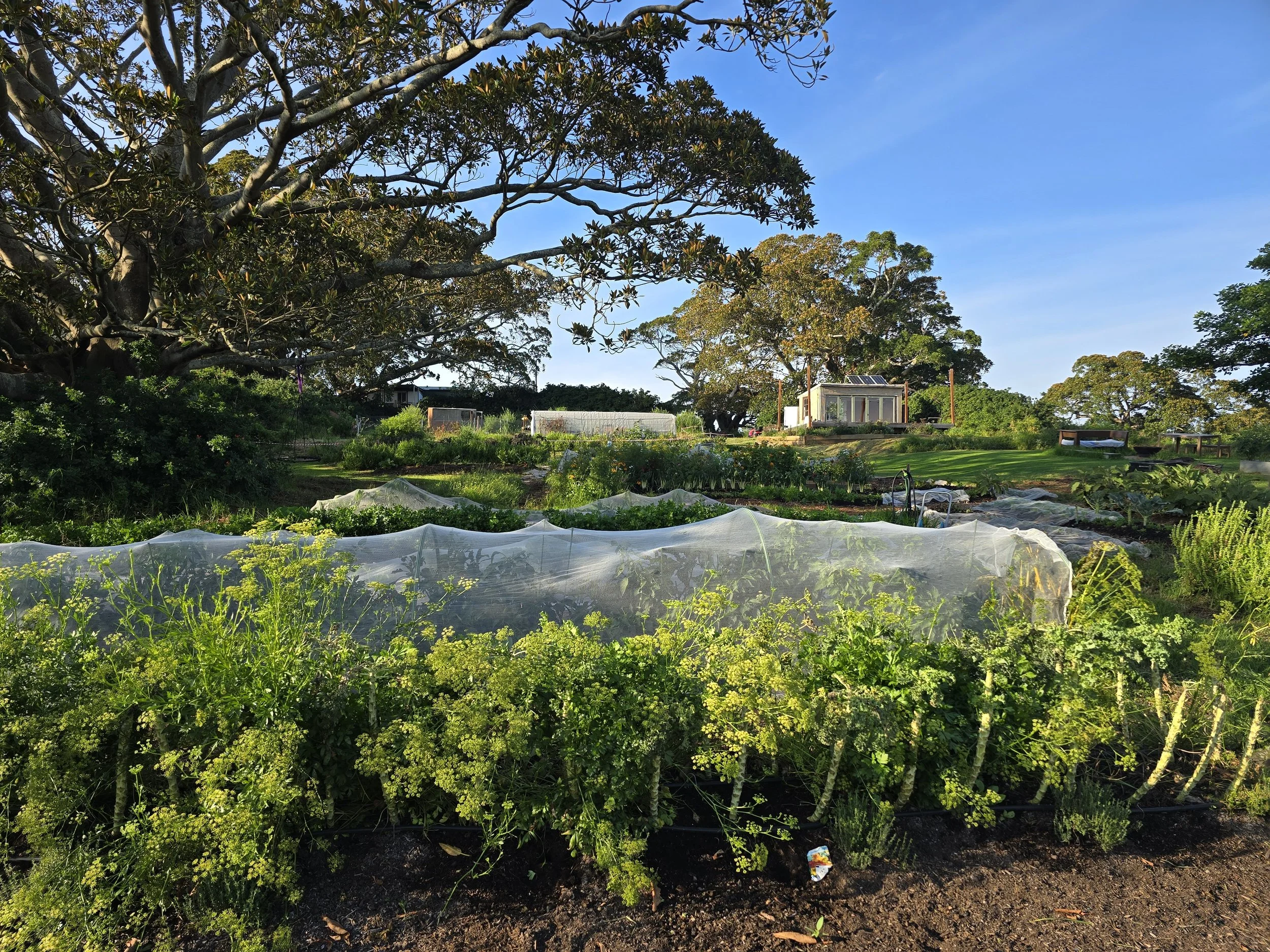
Working with the lay of the land I designed this space to be an abundant, regenerative and educational space for not only myself but the community to enjoy.
The Passion Project was a garden of plenty of produce and plenty of effective different systems for growing and plenty of natural organic fertilizers.
Having this scale of a garden and being the soul person caring for it has bought a wealth more knowledge and practical experiences than any course or university degree.
Now my mission has changed from knowing how to grow abundant produce myself to assisting everyday people to grow their own and further the importance of food sovereignty.
Whether you’re a backyard grower, a complete beginner or want to create something incredible on your property, I am here to help you create your passion project.

Food
-
Currently growing in the garden is an abundance of produce. Seasonally grown as nature intended, the plants are bursting with life providing us nutrient rich delights.
Fresh produce is available weekly to pick up on farm Monday afternoons 3 - 6pm. Available at The Pines Pantry on Collins street Kiama and at the Kiama Farmers markets Wednesdays 3 - 6pm.
-
What we are working towards is bringing fresh quality produce to you without the food miles.
A farm stall for all your fresh produce needs as well as delicious gelato and cheese from The Pines Farm.
When you're here to pick up your produce why not check and see if it lines up with a yoga class or a coffee at the garden.

SPACE
-
The Passion Project among its other beautiful attributes is a space. A space full of life, plants, flowers, nature and views.
We invite you on the times we are open to the public to come and sit. Enjoy a drink, chat to a tree, read a book, connect with a stranger or find a quiet place to sit with a friend.
There’s seating with a view and a swing for the kids
-
We're working on ways that we can include you in this beautiful journey.
If you would like to volunteer on planting days or building days I would love to hear from you!
Email me at kerryn@thepermaculturepassionproject.com or sent an enquiry through the contact me section.

FUN
-
Keep an eye out for our on farm Pop up’s. On the weekends we open occasionally for you to grab a coffee and gelato, wander the garden and buy some produce and milk on your way out.
Keep your eyes out for a fun art workshop, getting in touch with your body through yoga, meditation or breathwork or learning something new.
I'm very much looking forward to all the exciting things this spring and summer, make sure you sign up to the newsletter so you don't miss out . We do have limited spacing for workshops so get in quick if something tickles your fancy.
We are looking forward to having you here and being a part of the journey.
-
In the coming months we look forward to announcing some term long programs, school holiday programs and other artsy programs.
If you have a program you would like to run in the space, feel free to get in contact.
Systems of the Passion Project
Organic No Till Gardening

No-till gardening is a key practice in regenerative agriculture that enhances soil health and sustainability by minimizing soil disturbance. Unlike traditional tilling, it preserves the soil’s natural structure, protecting vital networks of roots and beneficial organisms like fungi. This promotes better nutrient absorption and plant growth while preventing soil erosion and improving water retention. By maintaining organic matter and soil aggregates, no-till gardening reduces the need for irrigation and keeps the soil more resilient against weather extremes.
Additionally, no-till methods support carbon sequestration by allowing organic materials to decompose in place, trapping carbon in the soil. This approach promotes biodiversity, encouraging a healthy ecosystem of beneficial organisms that naturally improve soil fertility. As a result, no-till gardening often reduces the need for chemical fertilizers and pesticides, making it a sustainable and eco-friendly choice for long-term soil health and productivity.
Pallet Bay Hot Composting system

The Pallet Bay hot composting system, featured in the Passion Project, is an innovative approach to turning organic waste into nutrient-rich compost for the garden. Using wooden pallets to create a simple and affordable structure, this system accelerates the composting process through hot composting techniques. By maintaining the right balance of carbon-rich "browns" and nitrogen-rich "greens," and regularly turning the pile to aerate it, the Pallet Bay system efficiently breaks down organic matter in a matter of weeks. The result is rich, dark compost that is packed with essential nutrients ready to be added back to the soil.
Composting plays a vital role in regenerative agriculture by replenishing nutrients in the soil naturally. The compost produced through the Pallet Bay system adds organic matter back into the garden, improving soil structure, increasing moisture retention, and promoting healthy microbial activity. This nutrient recycling reduces the need for synthetic fertilizers, making the garden more self-sustaining and eco-friendly. In regenerative systems, compost not only enhances plant growth but also helps build long-term soil fertility, aligning with the core principles of regenerating and revitalizing the land.
Worm Farms
Worm farms play a crucial role in regenerative agriculture and permaculture by transforming organic waste into nutrient-rich vermicast, or worm compost, which significantly boosts soil health. Worms naturally break down food scraps and organic matter, creating a powerful fertilizer that enhances soil structure, promotes microbial activity, and increases water retention. This process not only recycles waste but also produces a high-quality compost that supports plant growth and reduces the need for synthetic fertilizers. Integrating worm farms into regenerative systems aligns with permaculture principles of creating closed-loop ecosystems where waste is minimized, and soil fertility is continuously improved.
The Passion Project plans to create worm farms in various styles, ranging from larger-scale systems in bathtubs and IBC containers to smaller setups in plastic buckets and storage bins. These different styles cater to diverse spaces and needs, from home gardens to community or farm-scale applications. By incorporating these worm farms, the project can efficiently produce vermicast to enrich the soil across a wide range of garden beds, supporting the regenerative cycle of adding organic matter back into the soil. This approach not only promotes sustainability but also empowers participants to manage waste effectively while enhancing their gardens’ productivity
Water Catchment and remediation
